Food isn't just fuel - it's information. The foods you choose tell your body what to do, shaping your energy, mood, hormones, even your skin. It's the most powerful medicine most of us use three times a day, and it's meant to be enjoyed.
And it doesn't have to be perfect. Convenience food every now and then is okay and honestly, unavoidable. But if food is information, a handful of common ingredients quietly send the wrong signal: blood-sugar spikes, inflammation, and in some cases other issues serious enough to cause them to be banned in other countries. You don't need a chemistry degree to catch them, just a few names worth knowing. Here are twelve ingredients to look out for and avoid - especially in the foods you’re eating every day.
- High-Fructose Corn Syrup: A cheap liquid sweetener made from corn starch, hiding in everything from bread to "healthy" yogurt. Your body handles it differently than whole-food sugars: the fructose heads mostly to your liver, and a steady flood of it there is linked to fat buildup over time - while doing little to switch on the hormones that tell you you're full. So instead of satisfying you, it nudges you to keep eating, spiking your blood sugar on the way. It's one of the surest signs that a "food" is really a factory product.
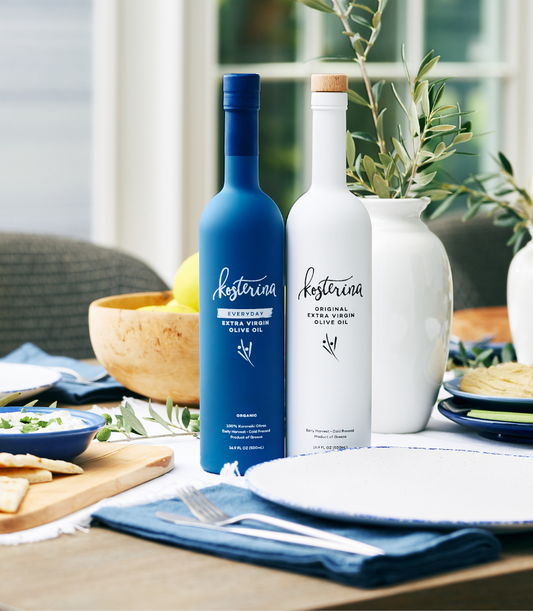
- Refined Seed Oils: Soybean, corn, and canola oils, industrially extracted and processed until they taste like nothing. They're cheap and everywhere. We're an olive oil company, so you know where we land – for oils, use only EVOO you can actually taste with all the health benefits.
- Artificial Dyes (Red 40, Yellow 5 & 6, Blue 1): Petroleum-derived colors that do exactly one job: make food look brighter. Purely cosmetic, increasingly scrutinized, and already being pulled from shelves in many parts of the world.
- BHA & BHT: Preservatives that keep fats from going rancid. Great for a long shelf life, which is precisely the kind of thing a fresher product doesn't need.
- TBHQ: Another petroleum-derived preservative, common in fried and ultra-processed foods. A reliable sign you're holding something built to last months, not made to be eaten fresh.
- Titanium Dioxide: A whitening agent that makes candy, dressings, and frosting look glossier. Banned as a food additive across the EU. It’s only for appearance, so we recommend you skip it.
- "Natural Flavors": The vaguest two words on any label. "Natural" in origin, technically, but the term can hide dozens of undisclosed compounds. Not necessarily harmful — just the opposite of transparent.
- Carrageenan: A thickener pulled from seaweed, used for a creamy texture. Fine for many, a digestive irritant for others. Worth recognizing if your gut is sensitive.
- Potassium Bromate: A dough conditioner that makes bread rise bigger and faster. It’s banned in the EU, UK, and Canada but it’s still legal in the US. One of the clearest "wait, why is this allowed?" entries on the list.
- Sodium Nitrite & Nitrate: Preservatives that keep cured meats pink and shelf-stable. Under high heat they can form compounds tied to health concerns, which is why processed meat draws so much attention.
- Artificial Sweeteners (aspartame, sucralose, acesulfame-K): Zero-calorie sweeteners in "diet" and "sugar-free" everything, and chemically a mixed bag: chlorinated sugar (sucralose), bonded amino acids (aspartame), or fully synthetic (ace-K). The catch is what they do beyond calories: your mouth registers "sweet" and your body braces for sugar that never arrives, which can confuse your hunger and fullness signals and leave you craving more, not less. A growing body of research also links them to shifts in the gut microbiome - the trillions of bacteria that influence digestion, immunity, blood sugar, and even mood - and the sugar alcohols in this family are notorious for bloating and GI upset.
- Maltodextrin: A highly processed starch used as a filler and thickener. Sounds harmless, but it can spike blood sugar faster than table sugar - and it tucks itself into plenty of "health" foods.
A shortcut while you're still learning the names: a scanning app can decode a label in seconds. Three worth keeping on your phone: Yuka (the best-known all-rounder; flags additives, and reads skincare too), Open Food Facts (free and open-source, with no brand agenda behind the score), and Bobby Approved from Bobby Parrish of FlavCity (opinionated, a clean-eating favorite) will flag artificial dyes, seed oils, added sugars and more. Treat them as training wheels, not gospel, as each bakes in its own judgment calls - and lean on them to build the instincts you'll eventually carry on your own.
Here's the reframe: a short ingredient list isn't a limitation, it's a feature. When you can read every word out loud — olives, salt, evoo, that's it — you don't need a decoder at all. That's the whole idea behind single-ingredient staples: the fewer names to memorize, the better. Screenshot this, tuck it in your notes, and let it make your next grocery run a little easier and healthier. Please also share it with anyone else who can benefit from a little more label-awareness.
The best labels are the ones you can read out loud. 🫒
Peace, Love & EVOO,
Katina and The Kosterina Team